On 04 June, 2026, Dr. Peter Coutros presented a talk entitled ‘Ubangui Communities in the Congo Basin’ at l’Institut de Paléontologie Humaine, Paris. This talk focused on the interdisciplinary results of the CongUbangi project:
Since 2024, the interdisciplinary CongUbangi project has been conducting archaeological, linguistic, genetic, and ethnographic research across the Central African Republic (CAR) and northern Democratic Republic of Congo (DRC). This work has revealed a rich archaeological landscape of rockshelters, metallurgical sites, burials, megalithic monuments, and occupation sites stretching between the 2nd millennium BC through the 17th century AD. This talk will focus on the results of our work at the >100 newly identified archaeological sites investigated by our team. These archaeological results will also be combined withlinguistic, genetic, ethnographic and oral historical data collected from across the region. Based on these interdisciplinary results, I argue for a continuity of Ubangi-speaking groups in the region going back at least through the early Iron Age. Furthermore, I challenge the dominant, Bantu-centric view of early village communities in Central Africa, and suggest that Ubangi-speaking groups also spread southward through the rainforest – possibly as far south as the Kwilu-Kasai region of DRC.
Between March 03-31, 2026, the CongUbangi archaeology team conducted a survey and excavation campaign along nearly 400 km of the Ubangi River, between Bangui and Mobaye. Lead by Dr. Peter Coutros, the team consisted of Dr Nicolette Edwards (Southern Methodist University), Prof. Dr. Jean-Pierre Donzo Bunza Yugia (Institut Supérieur Pédagogique de la Gombe), Ilo Holy (Institut des Musées Nationaux du Congo), Henri Zana (UGent, Université de Bangui), and Lucien Nguerede (UGent, Université de Bangui).
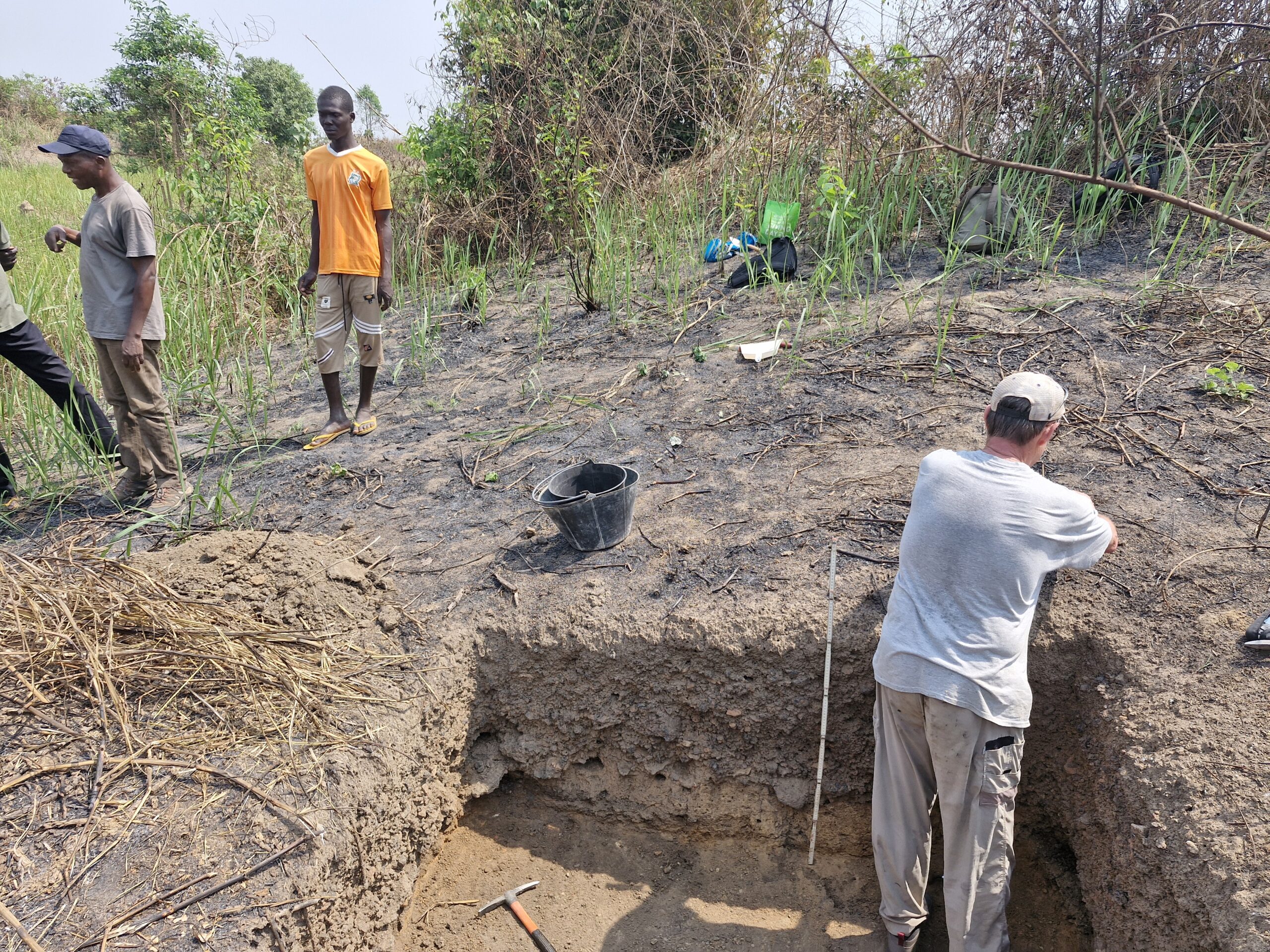
Combined with the 2024 mission and 2025 mission, these efforts have now revealed 58 newly-identified archaeological sites along the lower Ubangi River covering the past 2,000 years of history, from the Early Iron Age through the 18th Century AD. These include occupation sites, lithic production sites, burials, and iron smelting sites. Due to the diversity and deep time-depth of the evidence collected, the results of the forthcoming analyses will provide an extensive insight into the history of the region.
Between February 09 and 24th, the CongUbangi archaeology team, lead by Dr. Peter Coutros, conducted archaeological fieldwork focused on the megalithic monuments (locally known as Tazunu) of the Bouar region of Central African Republic. The team consisted of Dr Nicolette Edwards (Southern Methodist University), Henri Zana (UGent, Université de Bangui) , Lucien Nguerede (UGent, Université de Bangui) and our local collaborators. Over the course of the mission, the team relocated, mapped, and described the 37 known monuments from the region, while also documenting 6 previously unknown monuments. In addition, the team conducted archaeological excavations at two monuments, Tazunu Yole and Tazunu Dohn, in the Bimba region to the northwest of Bouar.
The Bouar Megaliths are currently on the Tentative List for consideration to the UNESCO World Heritage List, and, while many of the monuments remain intact, this mission revealed that these monuments are in danger. Several of the monuments have been destroyed during road and infrastructure construction or other activities. Still, the surveys and excavations yielded a large amount of data that will provide a much needed comparasion, both in architecture and material culture, to the few other monuments that have been investigated. These efforts will help shed light on one of the most impressive, yet poorly understood, megalithic traditions in Africa.
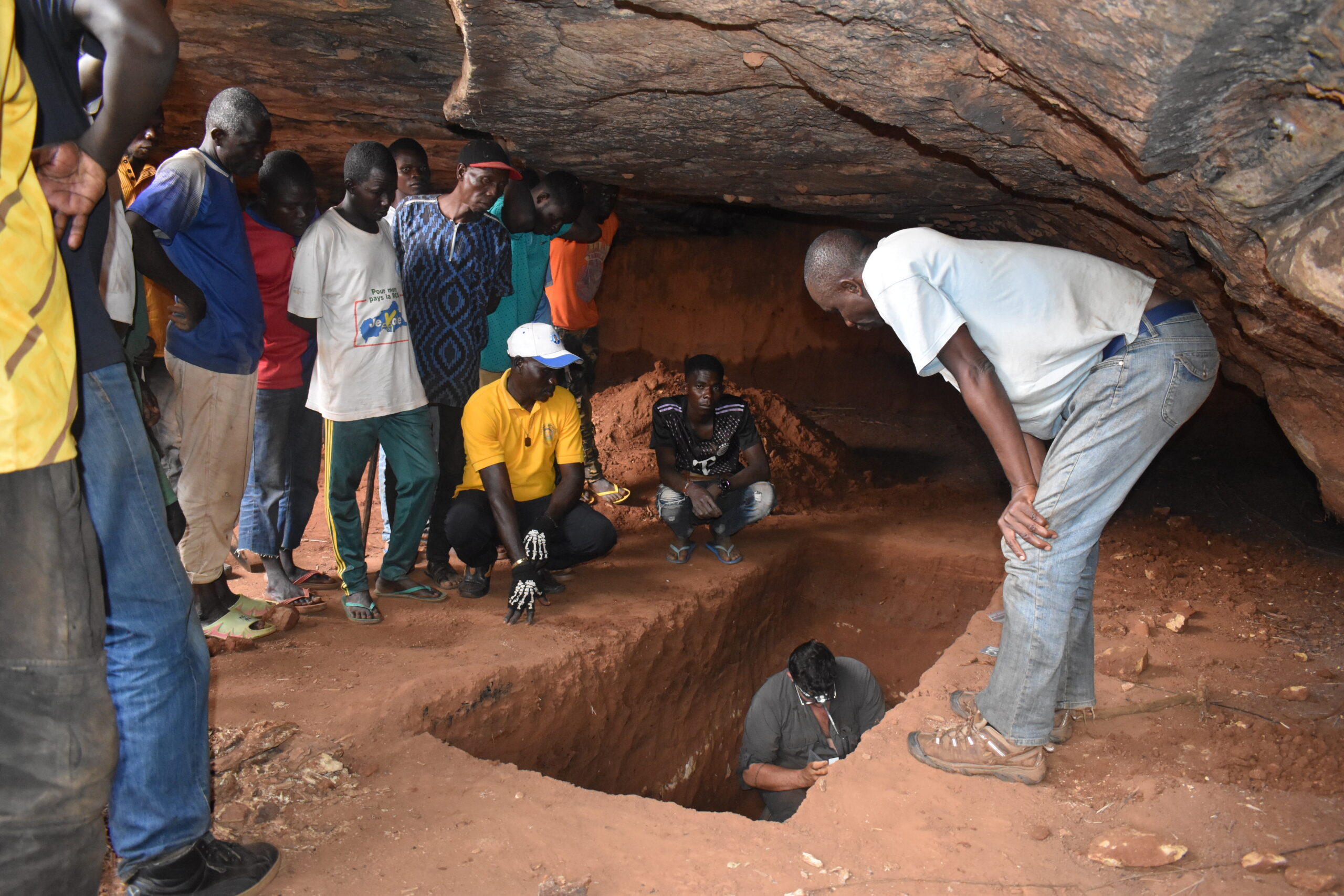
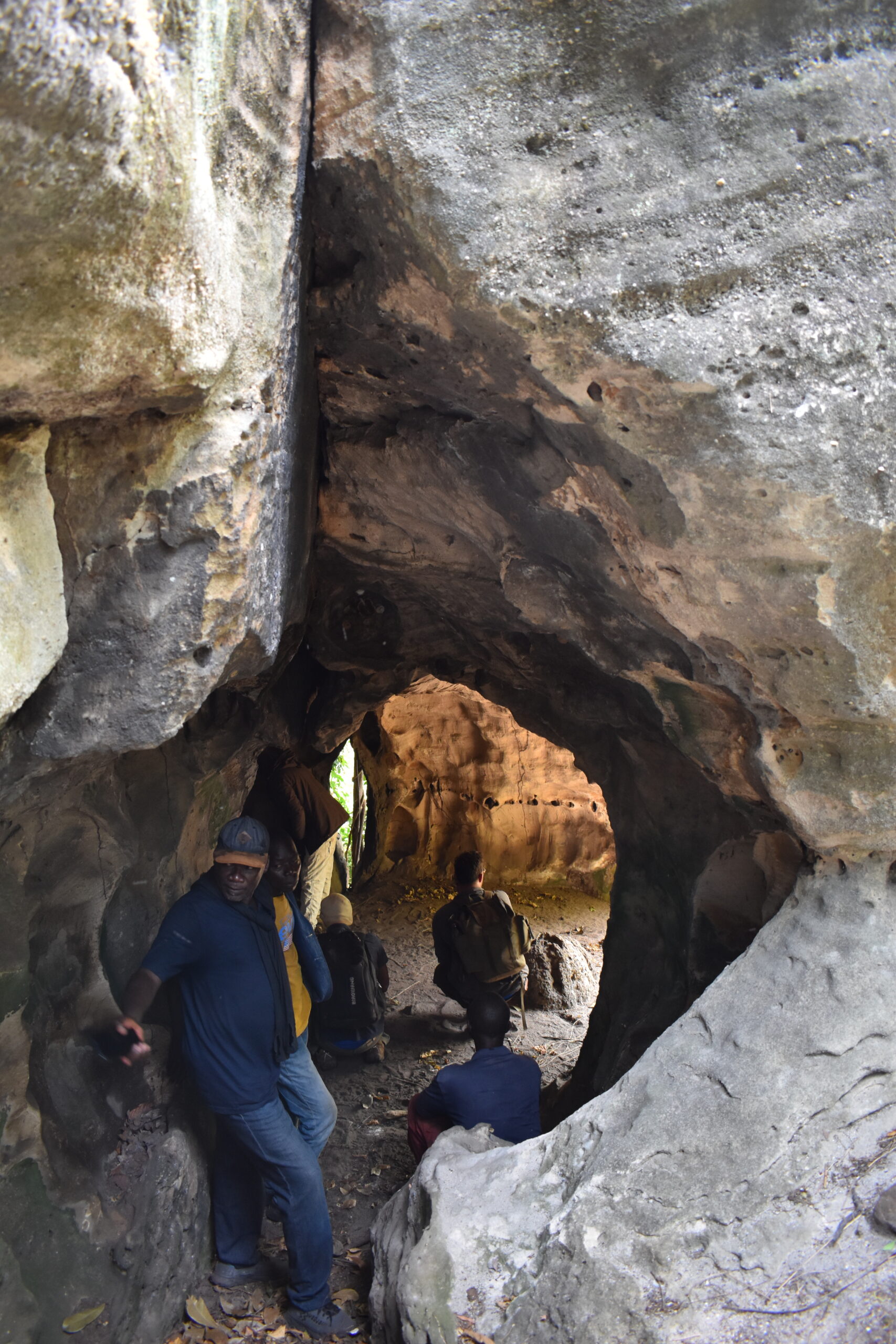
Between 27 January – 9 February Dr. Peter Coutros lead the CongUbangi archaeology team on a mission in the western regions of the Central African Republic. Dr. Coutros was joined by Henri Zana (UGent, Université de Bangui) , Lucien Nguerede (UGent, Université de Bangui), and Nicolette Edwards (Southern Methodist University). This mission was focused on the regions around Berbérati and Carnot and targeted rockshelters as well as occupation sites and metallurgical sites. A total of 22 newly identified sites were investigated and mapped by the team. Preliminary results of this work have revealed a dense archaeological landscape across the region that consisted of evidence for early human activity, including lithics and rock art, as well as more recent Iron Age settlements.
In addition, the team conducted ethnographic research with pottery producers near Bouar to compliemt the results from the 2025 mission.
Between July 22 and 25, the CongUbangi archaeology team joined over 550 other participants at the 2025 meeting of the Society of Africanist Archaeologists in Faro, Portugal. Our team presented three papers on various aspects of our recent ethnographic and archaeological research across northern Democratic Republic of the Congo (DRC) and southern Central African Republic (CAR).
Henri Zana presented a talk on his ethnoarchaeological work in the Nola and Bangui regions (CAR), with a talk entitled “The ethnoarchaeology of pottery communities in southwest Central African Republic”. Lucien Nguerede presented a talk entitled “An ethnoarchaeology of metallurgy in the Central African Republic”, that focused on his research on ancient and modern metallurgists in the Bangui, Bouar, and Alindao regions (CAR). Finally, together with Karen Lupo and Dave Schmitt, Peter Coutros presented a comprehensive talk on the archaeological findings of the CongUbangi project, covering the past 2000 years, during his talk “Archaeology along the Forest rim: new research in southwestern CAR”.
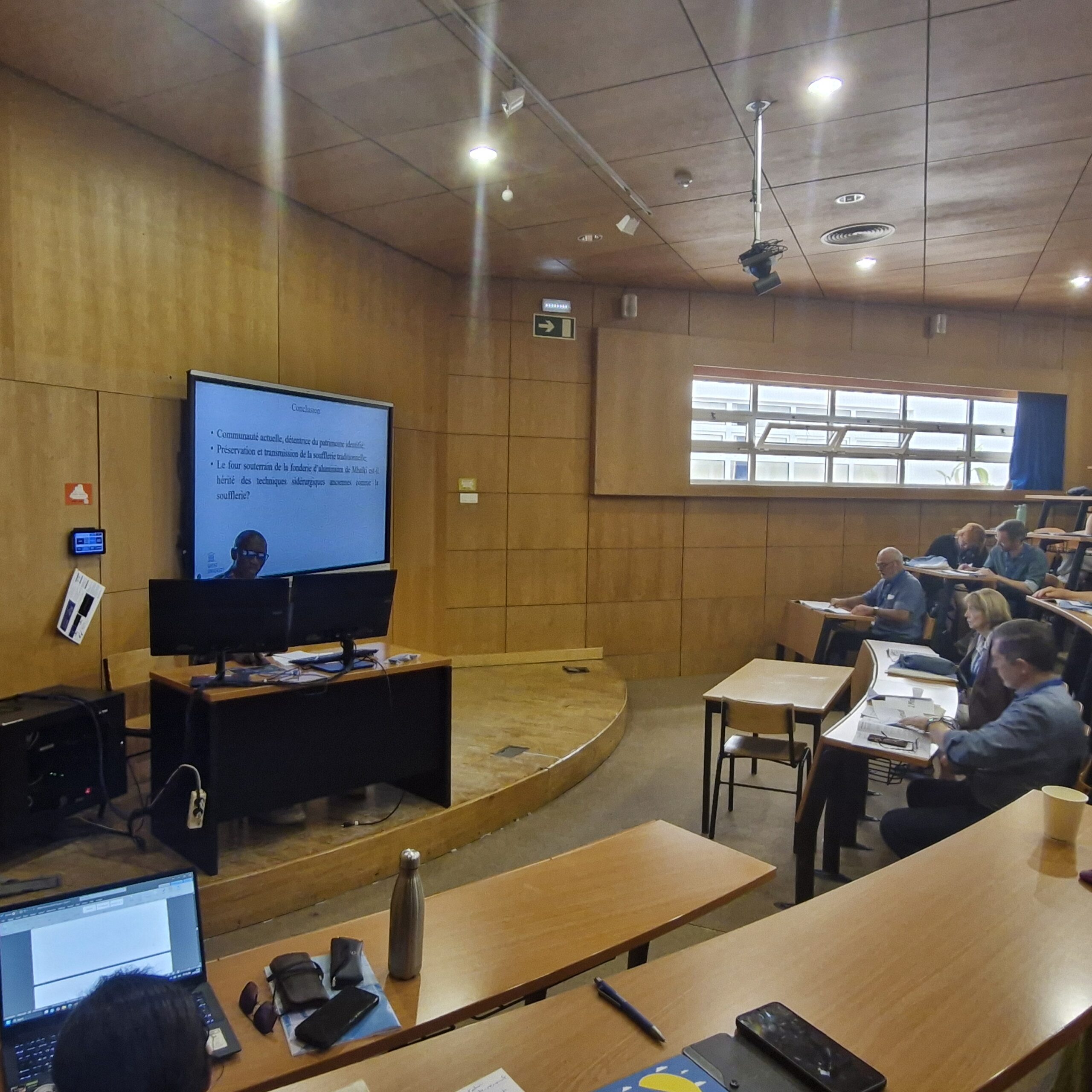
Lucien Pierre Nguerede presenting his talk: An ethnoarchaeology of metallurgy in the Central African Republic
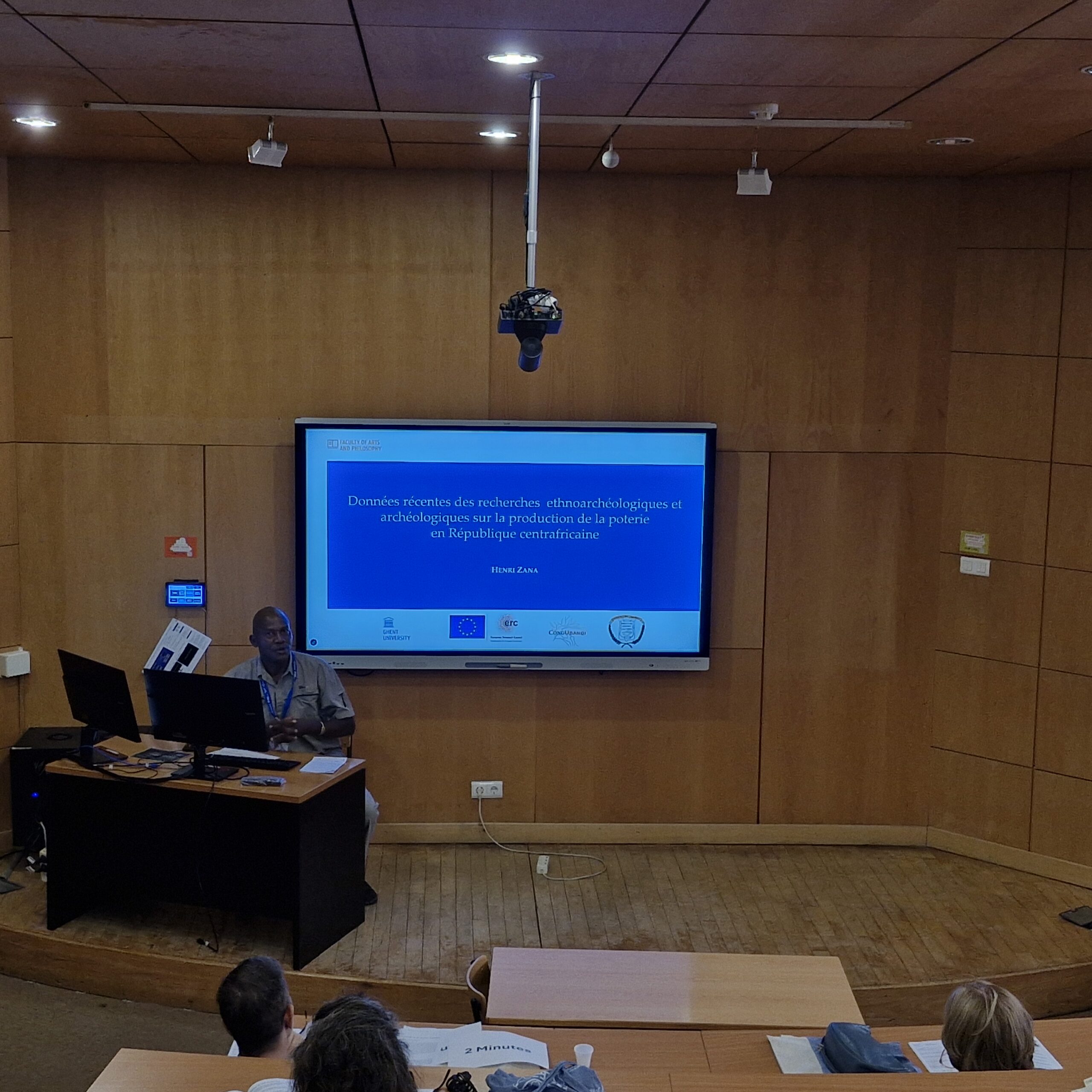
Henri Zana presenting his talk: The ethnoarchaeology of pottery communities in southwest Central African Republic
Between January 10th and February 1st, the CongUbangi team conducted its first archaeological mission to the Central African Republic.
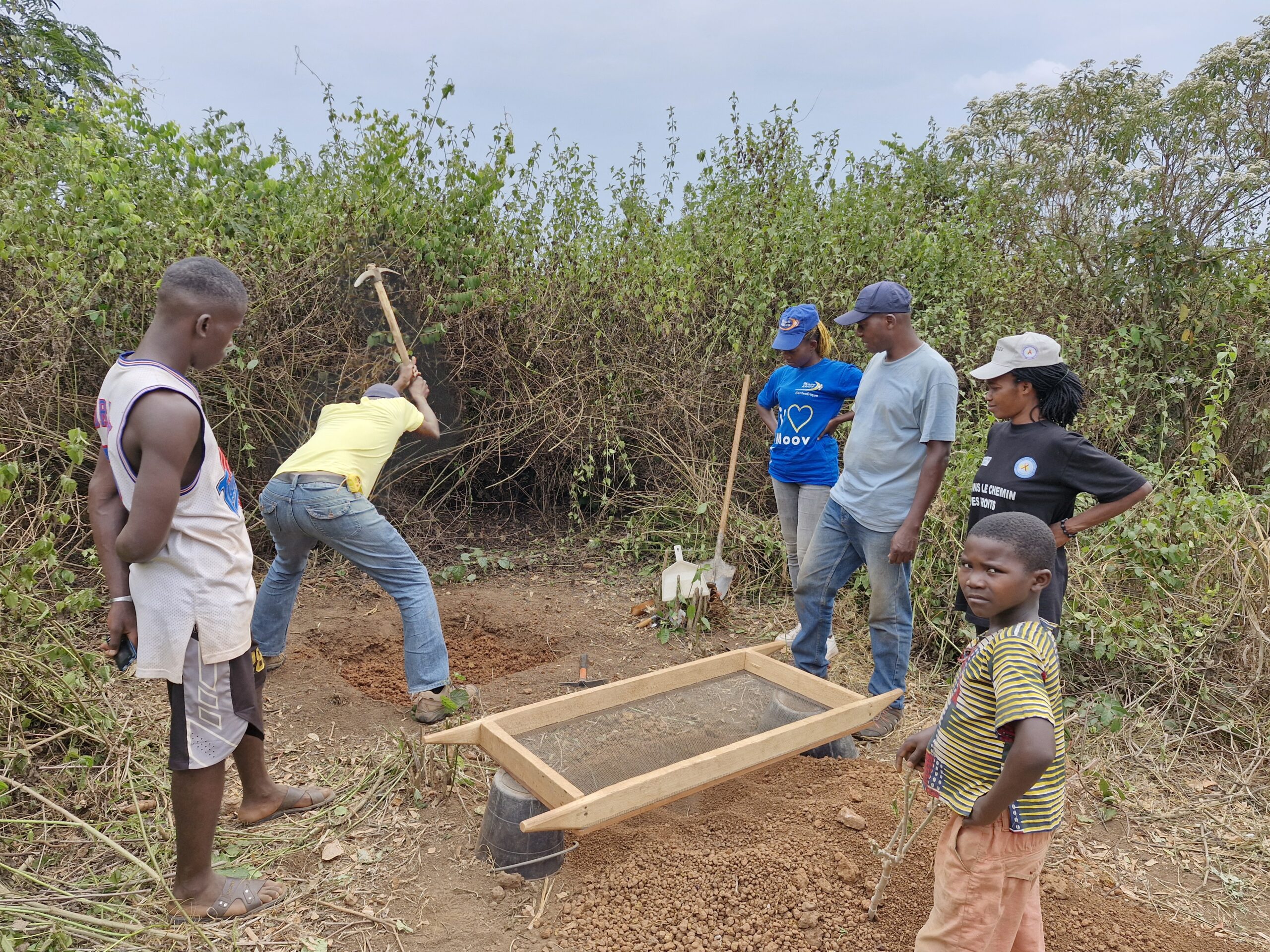
The archaeology team, made up of Peter R. Coutros, Lucien Nguerede, and Henri Zana joined Professor Karen Lupo and Dave Schmitt from Southern Methodist University, and Emmanuelle Namkomana and Lira Bangué – two Master’s students from the University of Bangui – on a joint survey and excavation campaign along the Mpoko River north of Bangui. The joint teams identified numerous previously undocumented sites, including pottery and lithics scatters, and excavating four new trenches.
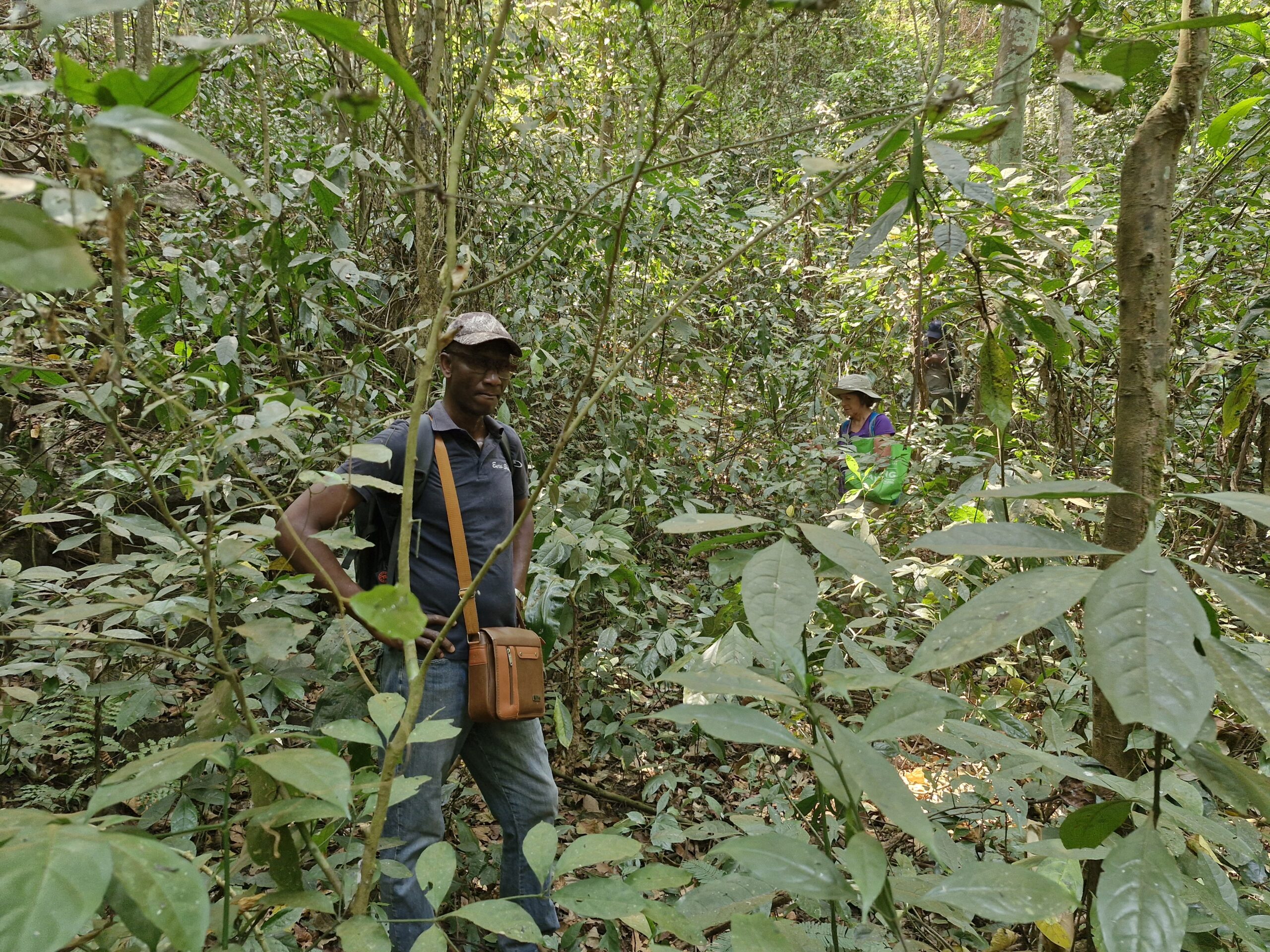
From there, the CongUbangi team traveled southwest to Mbaiki in order to expand the scope of the survey and excavation campaign. Peter, Lucien, and Henri documented more than a dozen archaeological sites, including ancient settlement and iron production locations. In addition to the archaeological work, the team conducted preliminary ethnographical interviews with metallurgists in the Mbaiki region. These artisans combined traditional and modern techniques in their work, which will provide much needed data on comparative forms of smelting and forging.
Lucien Nguerede, Prof. Karen Lupo, and Henri Zana conducting survey in the forest near Mbaiki.
Dave Schmitt conducting excavations at an iron smelting site near Bangui.
The ConguBangi team conducting excavations along the Mpoko River.
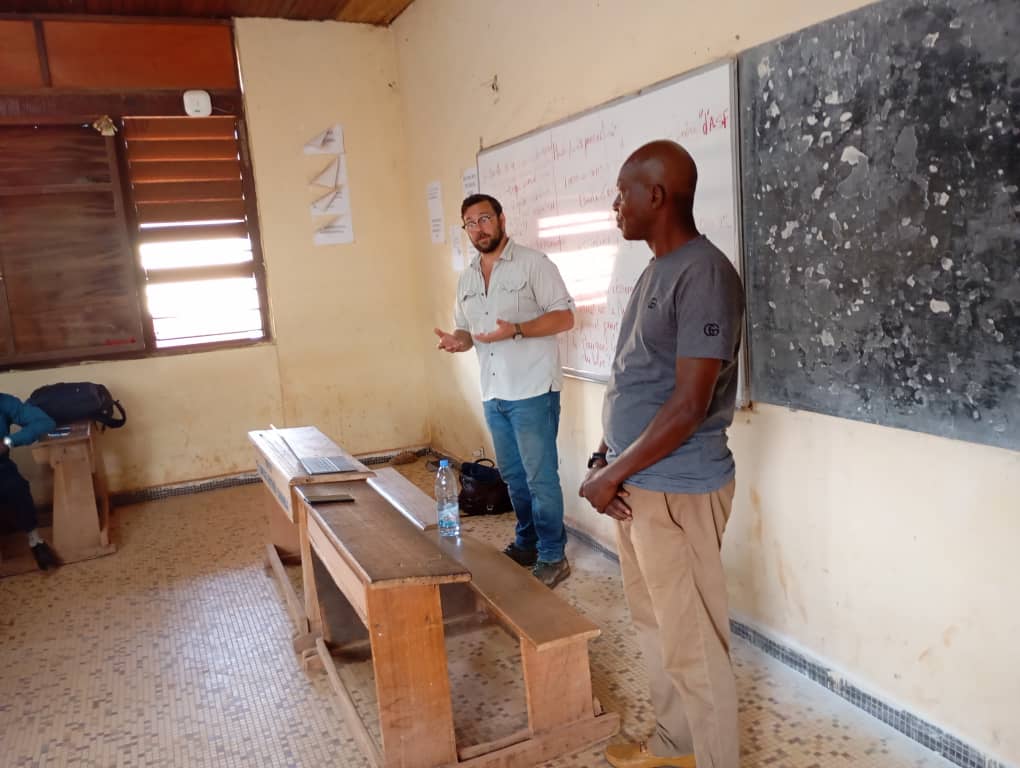
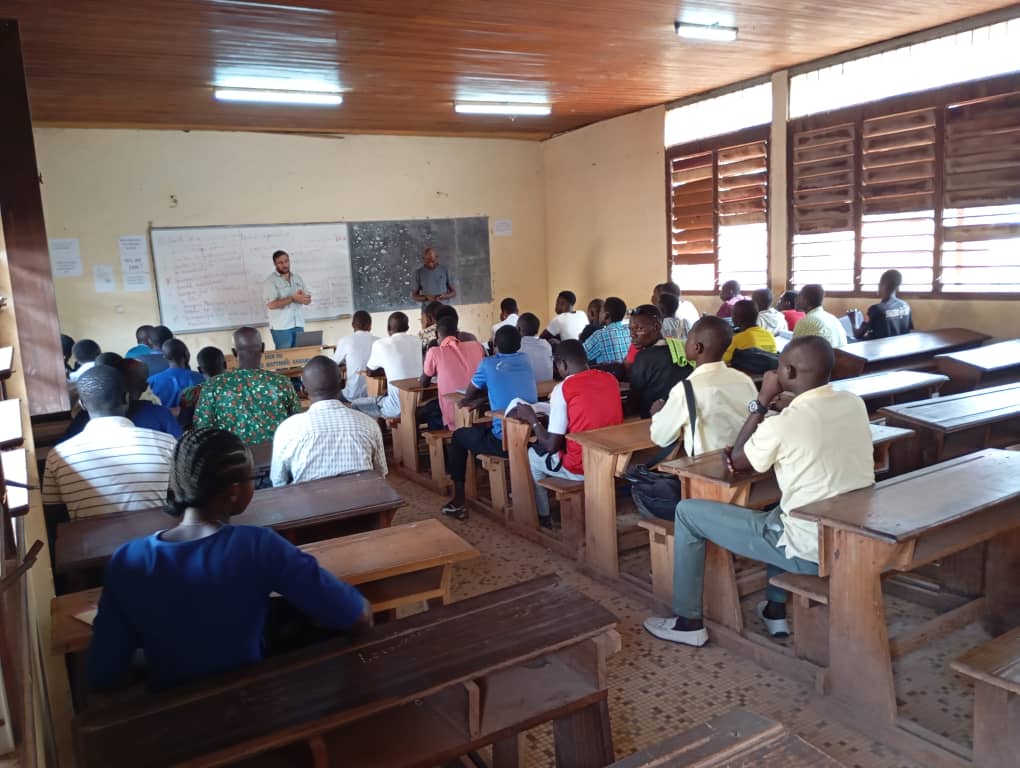
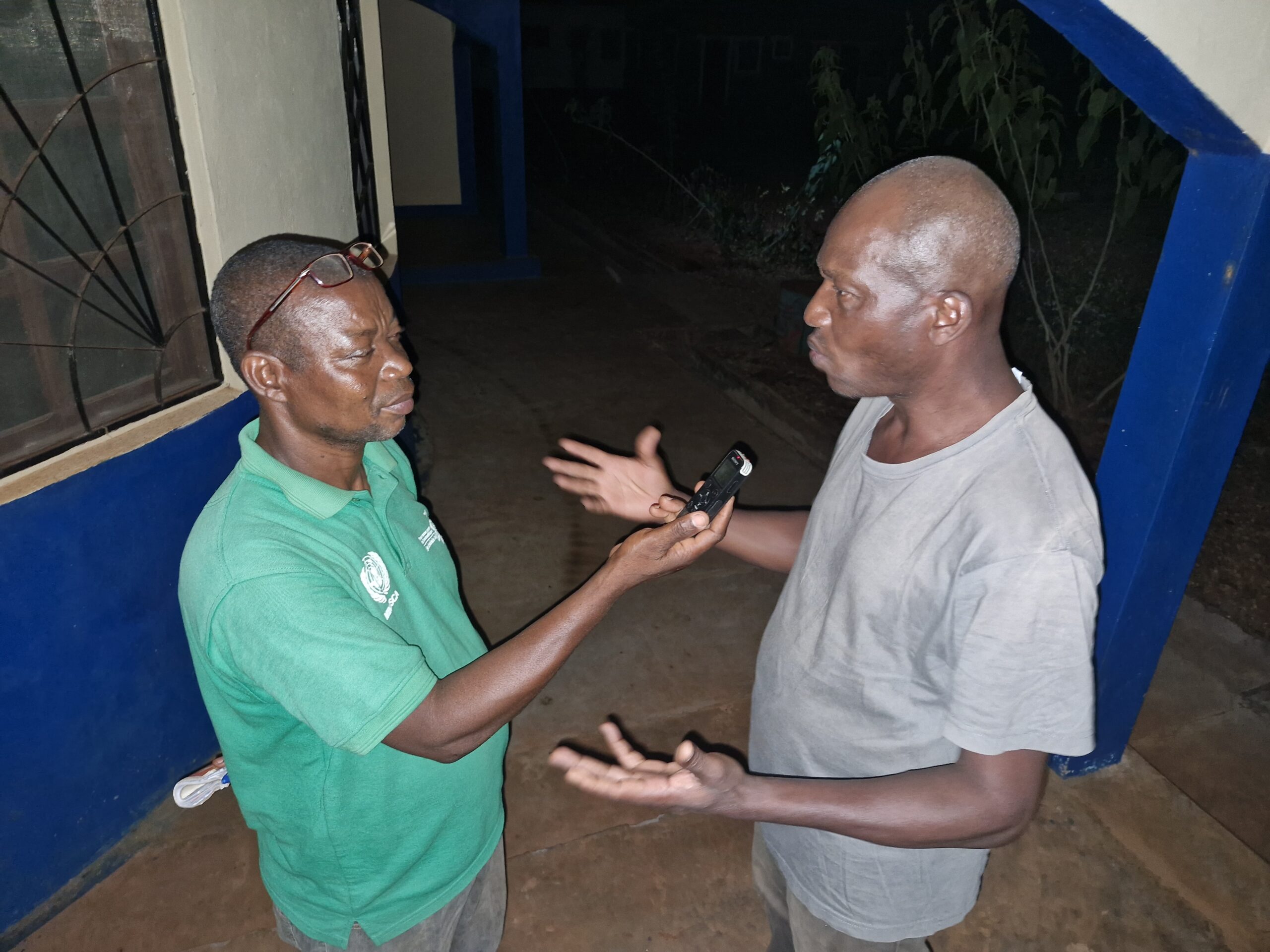
As this was the first CongUbangi mission to the Central African Republic, our team also met with Professor Gérard Gresenguet, Rector of the University of Bangui, to discuss current and future collaborations with Ghent University. Peter also gave a lecture to interested students and staff of the university about the research that the team was currently conducting, as well as the future plans for the project. In order to further incorporate the local communities into our research, Henri Zana conducted a radio interview with the local Mbaiki radio station, explaining the goals and methods of the archaeology portion of the project. In addition, Ambassador Patricia Mahoney chaired a roundtable with our team, Professor Rock Emmanual Youili-Mognaman (University of Bangui), Professor Bernard Simiti (University of Bangui), and representatives of the Ministry of Culture and the Boganda National Museum. These meetings have laid the foundations for a long-term partnership between the CongUbangi project, Ghent University, and the political and academic institutions across the Central African Republic invested in cultural patrimony.
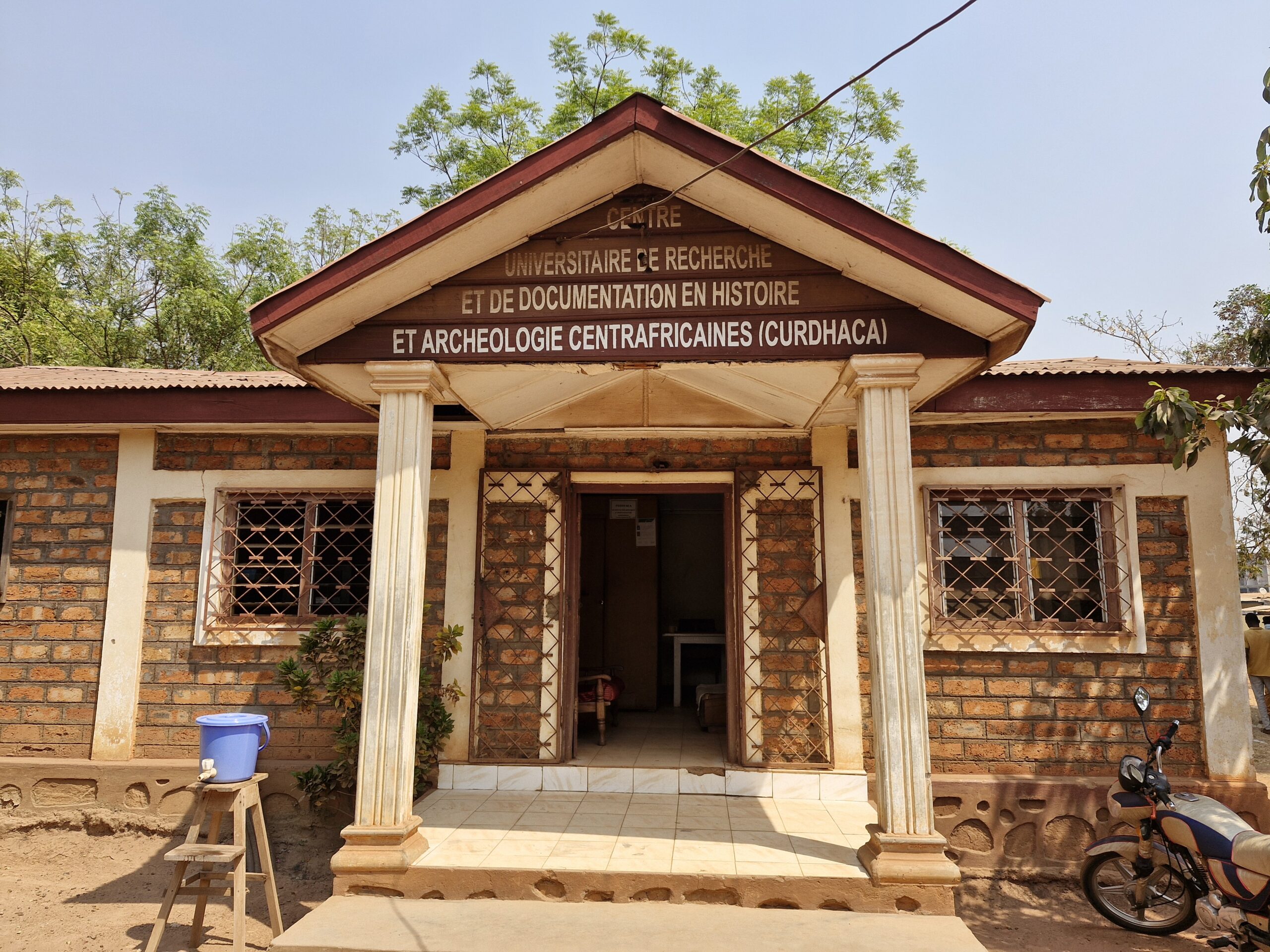
The Centre Universitaire de Recherche et de Documentation en Histoire et Archeologie Centrafricaines (CURDHACA).
Peter Coutros Giving a lecture at the University of Bangui.
Peter Coutros Giving a lecture at the University of Bangui.
Henri Zana giving an interview for the local Mbaiki radio station.